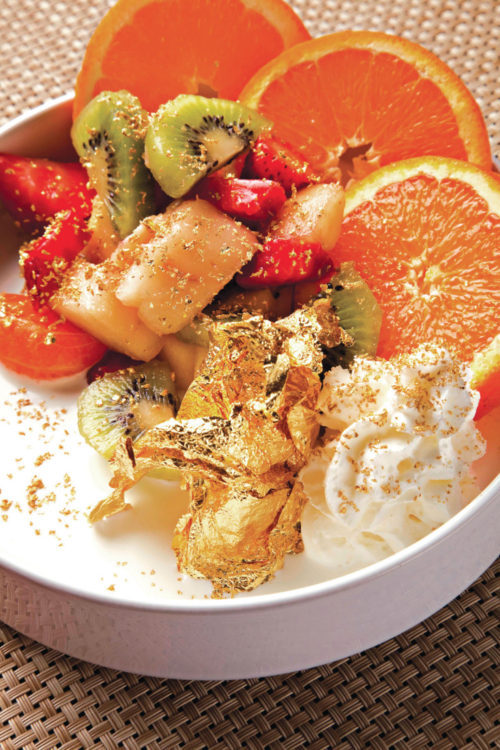
 In the world of edible gold leaf, one brand name stands above all others, that of Giusto Manetti Battiloro, http://manetti.com, Florentine purveyors of gold leaf since 1600.


 With summertime entertaining at its peak, and the fall holiday entertaining season right around the corner, we thought we’d introduce you today, dear readers, to the premier global luxury brand in this category. Not yet sold in the USA, if you would like to order Manetti edible gold flakes as a gift or for your holiday entertaining needs, contact your UK friends asap, and ask them to order it for you through this Amazon.com/UK link and ship it to you.
 The History Of Edible Gold, from the site of Manetti:
“The first evidence of gold used as a food dates back to the second millennium BC in ancient Egypt. The colour of the skin was gold in the frescoes, and the tombs and sarcophagi of the pharaohs were decorated in gold, therefore it was eaten because it was considered to be a sacred food by the Egyptians, for currying favour and being closer to the gods.
It is believed that since ancient times, far Eastern cultures and civilizations also commonly combined food and gold to draw the deity’s attention toward them. There is reasonable certainty that this is not just a legend but a real and widespread practice witnessed by Marco Polo a few centuries later and recorded in his manuscript Il Milione.
An exception to the practice of using edible gold flakes as an ingredient for sacred purposes can be found in Japanese culture and civilization. In fact, in ancient times, edible gold was used in the sense in which we understand its use today, for decorating food and drink: bottles of saké with gold flakes inside and special dishes covered with gold leaf. It is highly probable that this custom was born out of the tea ceremony, one of Japan’s most ancient traditions.
In Europe, edible gold arrived in the Middle Ages, where it was used exclusively for decorating dishes. In the courts of the Italian nobles, such wide use was made of it that traces of its use were recorded in the books of the era.
Galeazzo II Visconti, in 1368, on the occasion of the wedding of his daughter Violante, delighted his guests by offering them sturgeon, carp, duck, quail, and partridge, all covered in a very thin gold leaf. In Venice in 1561, on the occasion of a festival in honour of the Prince of Bisignano, bread and oysters were served covered with gold leaf. In that same city, the nuns of the Convent of Santa Maria Celeste mixed edible gold into the batter of their bussolai, traditional Venetian biscuits. Finally, in sixteenth century Padua, edible gold was used so widely that the city council decided to limit its use, declaring that at wedding receptions, no more than two courses could be served using gold leaf as a garnish.
However, not only in Italy was edible gold used to enrich the banquets of the noble classes. In fact in England, at the court of Elizabeth I, oranges, pomegranates, dates, figs and even wine grapes were covered with gold dust.
 Michelen starred Florentine chef, Marco Stabile, Manetti’s brand ambassador for their line of Gold Dust edible gold products, developed a recipe [for those of you who are gourmet cooks or have one working for you or who work with caterers ] for egg poche with truffle-flavored gold, which you can find here.
Wouldn’t this make a beautiful presentation for a Christmas breakfast celebration?
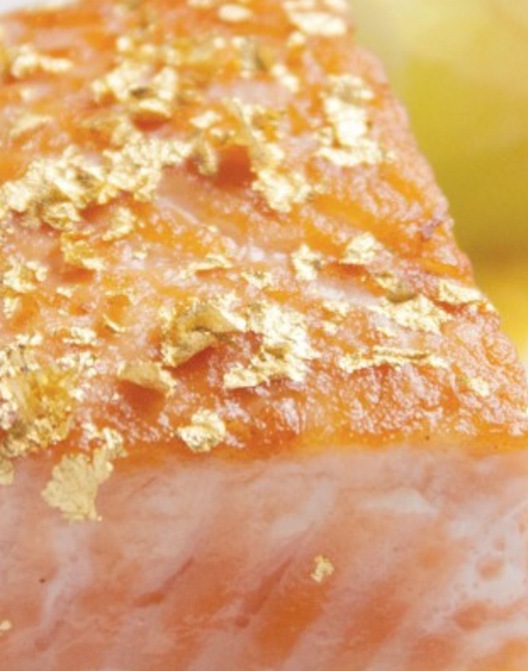
And sprinkling fresh, moist salmon with edible gold flakes makes it so much prettier for special occasion entertaining!
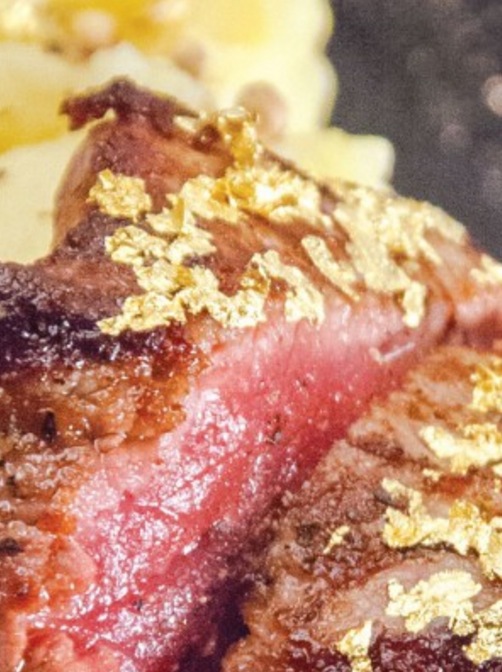
 Or a delicious steak.
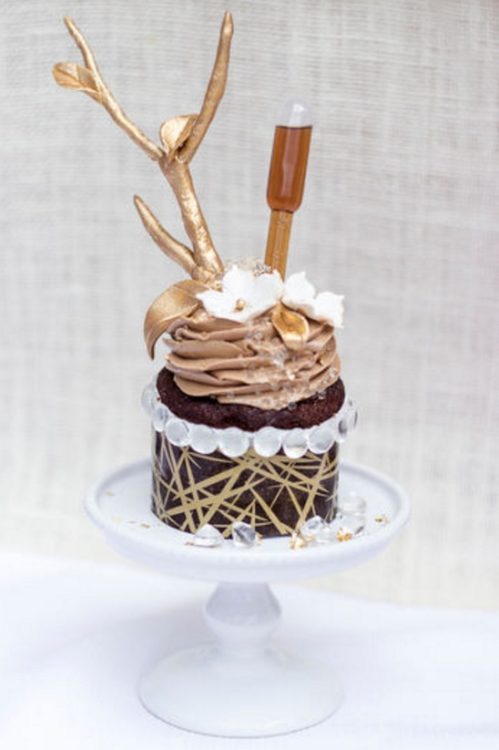
 We loved reading about Manetti’s edible gold leaf being used in the creation of the the cupcake below. It was created by a Toronto pastry shop as a 40th birthday gift.
The detail we like best is the pipe filled with a 21 year-old cognac Courvoisier to be squeezed onto the cupcake before the consumption!
The cupcake’s price was $900.00, but for a once in a lifetime event, what an exquisite way to make a gourmand feel special!
Read more, here.
 And then there are donuts sprinkled with Manetti edible gold leaf, as featured on Style Me Pretty, with the recipe shown here on Manetti’s site.
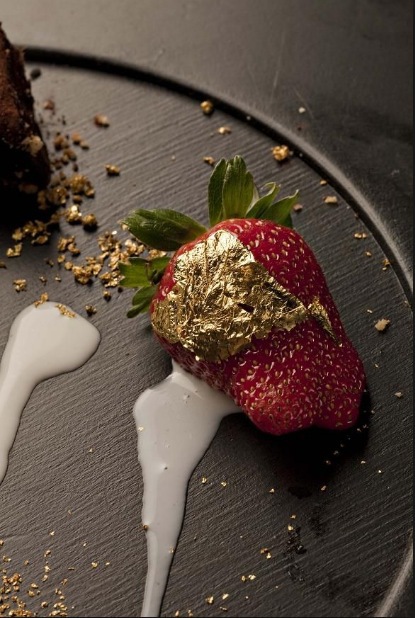
 And as you might expect by now, Manetti sponsors the World Pastry Stars luxury confectionery event in Milan, and below is a creation made using their edible gold leaf.
How beautiful is this?
 Yes, please, for those of us who prefer elegant simplicity.
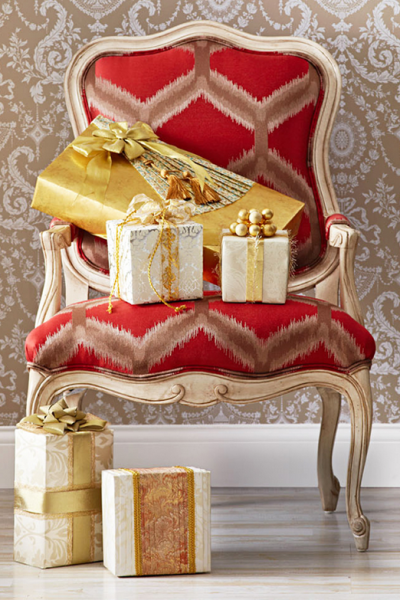
 We also think Manetti’s gorgeous packaging would delight any luxury interior design client that receives it for a holiday or special occasion gift.
What do you think? The hardest decision is: crumbs… flakes…
 or powder.
 And,lastly, dear readers, don’t forget to sprinkle it on your drinks.
Can you imagine how sparkly this would look under candlelight, too?
 Manetti, carrying on a family tradition of luxury, quality and innovation in gold leaf since its founding in 1600.
www.manetti.com
~~~
#LuxuryIsATotalExperience
Leslie Carothers
for
Leslie Hendrix Wood
Leslie Hendrix Wood Interiors
Interior Designer
Midland, Texas
 Owner, the Hadley Court blog
~~~
~ We invite you to please click the links below to follow Hadley Court on our other social channels ~
Facebook
Pinterest
Twitter
Instagram
This post has not been sponsored nor has any compensation been accepted in kind.